
Parliament Senate Hall
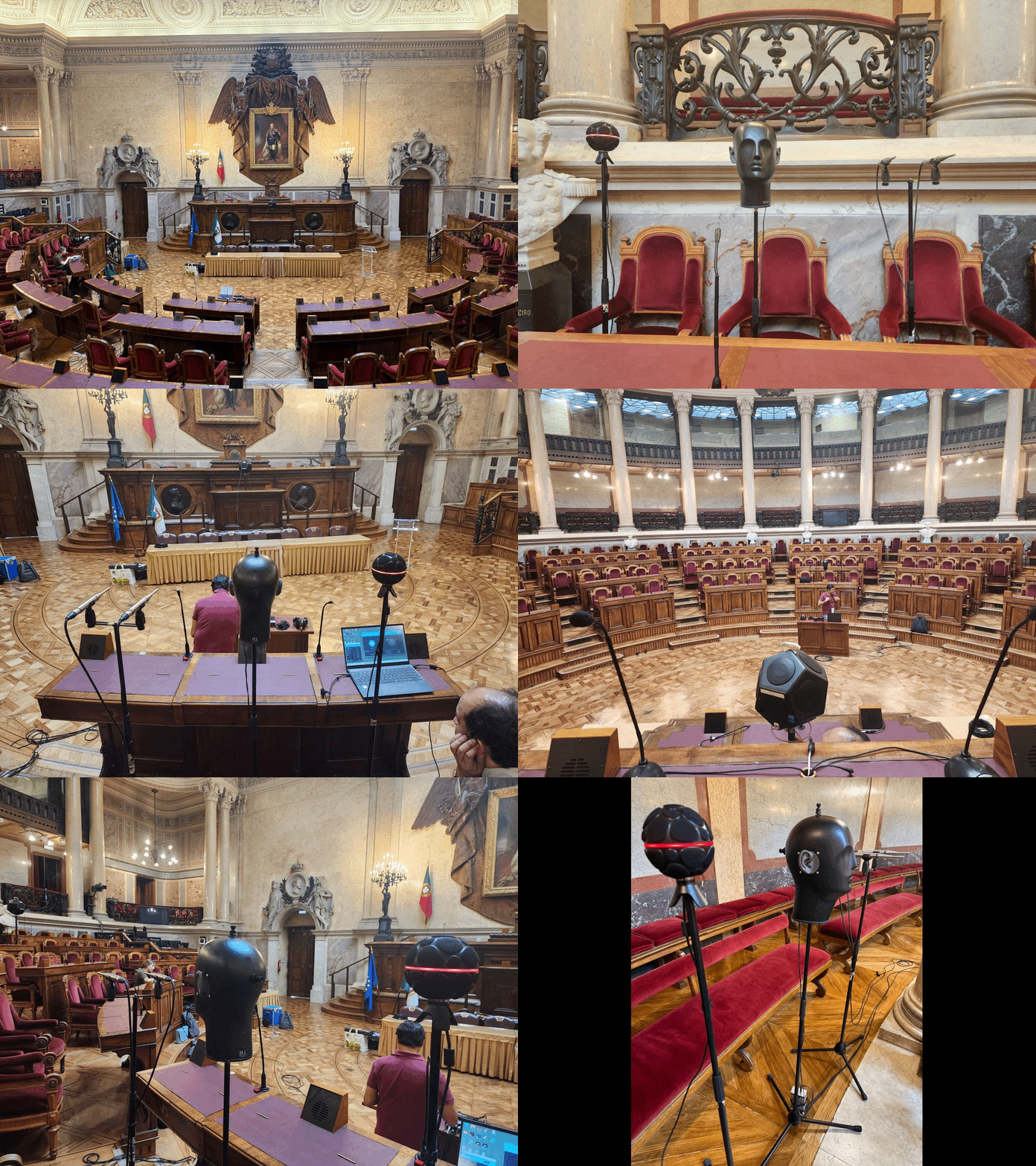
With a semicircular floor plan and amphitheater-style layout, the hall is organized with simple galleries at each end and two tiers of galleries with two upper balconies, with cast metal railings, separated by a series of polished limestone columns, with composite capitals featuring the national coat of arms and the five shields.
The floor is made of oak parquet with rosewood inlays.A frosted glass skylight provides natural zenithal lighting to the entire space.
The stucco ceiling was painted in grisaille, in trompe l’oeil, simulating bas-relief cartouches with geometric and figurative motifs, by the painter-decorator Pierre Bordes. The plaster walls imitate Siena marble.
Along the galleries, along the amphitheater, are eight marble busts representing illustrious Peers.
The armchair is upholstered in leather and topped by two figures holding books, flanking a medallion with the five shields and a castle from the Portuguese coat of arms, supported by a pulpit with the Latin inscription In legibus salus (“Salvation is in the law”). In front of the President’s table there is a clock designed by Anatole Calmels.
The medallions above the doors represent D. Pedro IV (on the left, facing the President’s table) and D. Maria II (on the right) and the portrait of D. Luís I, the monarch contemporary to the inauguration of the Chamber of Peers, was placed on the wall behind the President’s tribune.
The internal area of the Senate Hall is approximately 368 m2, with an average ceiling height of ca. 13 m, its volume is approximately 4788 m3.
Main Materials: mixed masonry, marble, wood, painted stucco, glass, fabric, iron.
Measurement points and source location
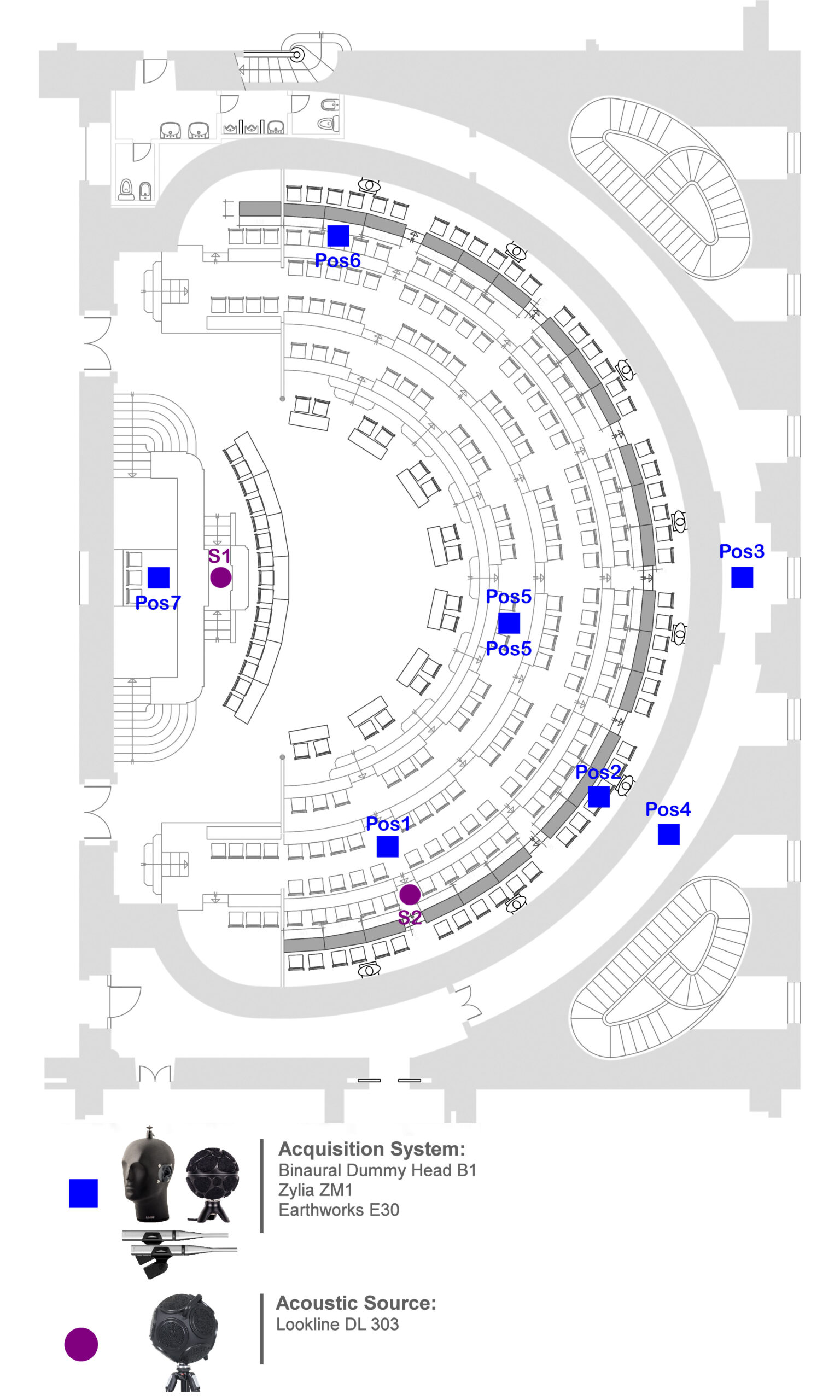
The sound source was located in two positions inside the Senate Hall: in the speaker’s pulpit (S1) and in the fifth row of the benches of the right wing (S2). Seven measurement points (Pos1 – Pos5 for S1; Pos5 – Pos7 for S2) were chosen inside the hall in carefully chosen locations so to cover several benches and the president’s tribune.
 Português